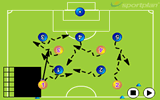
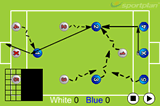
Play 3 v 3 in the middle area with goalkeepers stationed in each of the goals. Balls are placed around the field so that as soon as a ball goes out, the closest ball is played in.
As soon as a player receives the ball from the goalkeeper or an outfield teammate, he should attempt a shot on goal. The defending team must attempt to pressure the ball carrier and closely mark all other attacking players.
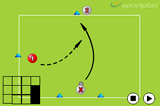
Make early decisions. The player nearest to the player with the ball must challenge. Do not get beaten by an attackers first touch. Get there early, then establish your position. Clear communication between defenders is key.
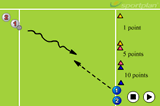
Play 5 v 5 with 1 regular goal on each end line in a 30 x 50 yard area.
in more ways than one
 sportplan_netball

in more ways than one
sportplan_football

Roughly a fifth of Premier League goals come from set pieces, and the gap between teams who plan their routines and teams who do not has never been wider. Here is how the modern set-piece specialists design attacking corners, free kicks, and throw-ins - and how you can apply their ideas at any level.

The next frontier in football coaching is not physical, it is mental. Cognitive load training - the deliberate use of perception, decision-making and dual-task demands inside football drills - is reshaping how the best academies develop players. Here is what it means and how to use it.

If the last decade taught us about pressing, this one is teaching us about what stands behind it. Rest defence is the shape your team holds while attacking, and it is the difference between dominating a game and getting picked off on the counter.